


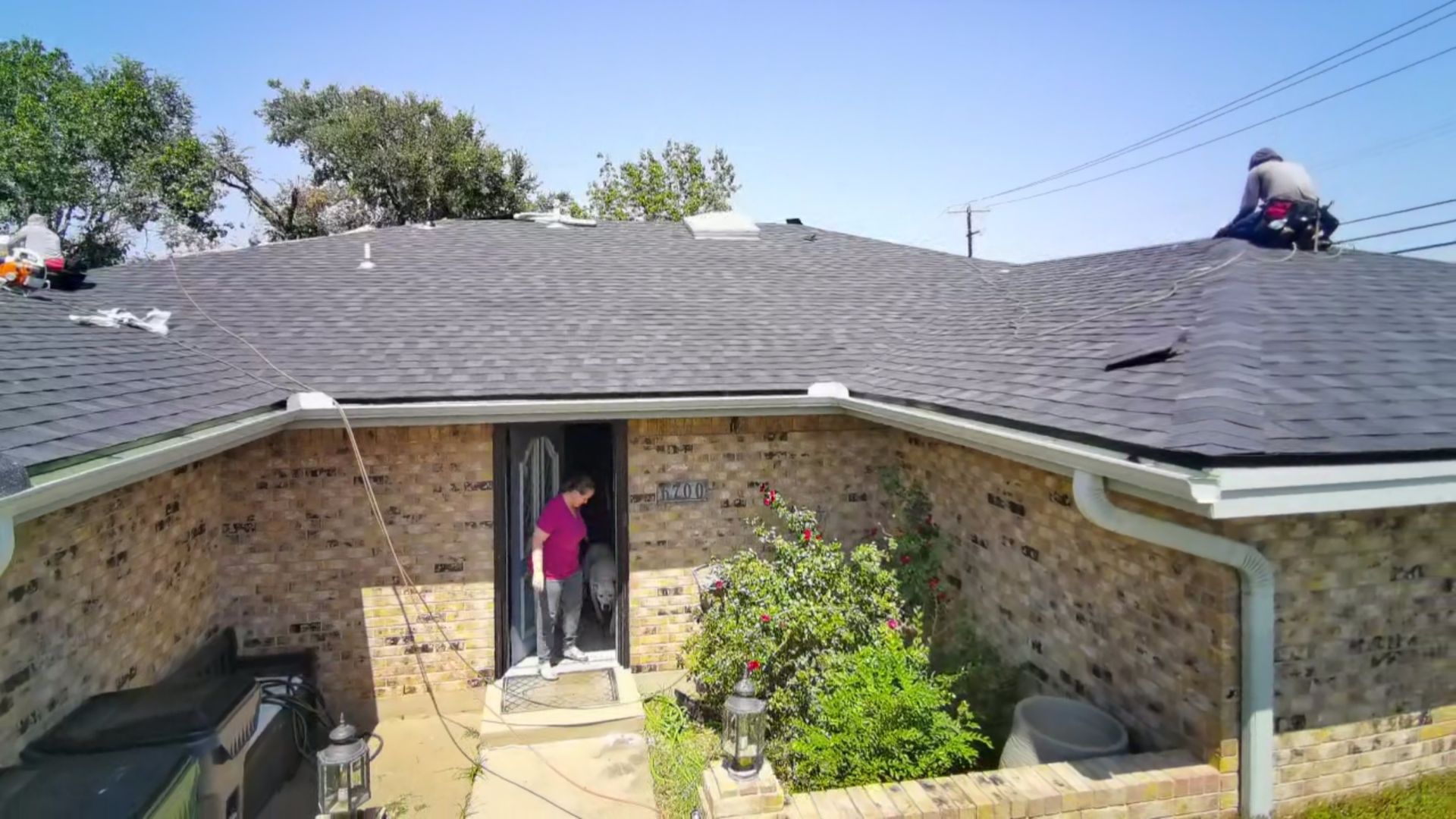
Impact Damage Hidden in Shingle Granules
Hail Damage Repair & Inspection in Wichita Falls for roofing systems exposed to severe hailstorm activity
Hail impacts create bruising in asphalt shingles that may not produce immediately visible holes but compromises the protective granule layer and accelerates deterioration that leads to premature failure. The damage appears as dark spots where impacts knocked granules loose, as dented metal flashing and pipe boots, and as cracked or fractured shingle edges where large hailstones struck with sufficient force to break the asphalt substrate. Hail damage repair and inspection services evaluate roofing systems after hailstorms throughout Wichita Falls, where regional weather patterns regularly produce severe hail events during spring and early summer storm seasons. EZ Roofing & Construction LLC conducts detailed assessments designed to identify both obvious damage and subtle impacts that affect long-term roofing performance even when immediate leaks do not develop.
Timely inspection matters because hail damage continues affecting roofing systems long after storms pass. Granule loss exposes underlying asphalt to direct UV radiation and temperature extremes, causing accelerated aging that shortens remaining roof life by years. Metal components show denting that compromises water shedding and creates low spots where moisture collects. Impacts on ridge caps and flashing create immediate vulnerability at the locations most critical for weather protection, and insurance claim windows typically require documentation within specific timeframes after storm events.
Schedule a free hail damage inspection immediately following severe hailstorms to establish damage patterns and document conditions while evidence remains clear and claim submission deadlines can be met.
Why Detailed Assessment Works for This Situation
Hail inspection requires close examination from the roof surface rather than ground-level observation, since impacts that significantly damage shingles may appear minimal from below. Inspectors look for impact marks across multiple roof sections to establish damage patterns, measure dent sizes in metal components, and assess whether granule loss reaches levels that affect shingle integrity. Testing involves pressing damaged areas to determine whether hail impacts fractured the fiberglass mat beneath the asphalt coating, which indicates damage severity requiring replacement rather than simple monitoring.
Accurate documentation includes photographs showing impact locations with reference measurements, written descriptions of damage density across different roof sections, and assessment of whether damage meets insurance policy thresholds for repair or replacement coverage. Honest recommendations distinguish between minor impacts that do not compromise roof function and severe damage that justifies immediate intervention, ensuring property owners receive appropriate guidance rather than unnecessary replacement recommendations for roofs showing only cosmetic impact marks.
Insurance claim assistance includes coordinating with adjusters during property inspections, providing supplemental documentation when initial assessments underestimate damage severity, and explaining repair requirements in terms that align with policy coverage language. Regional hail activity common in Texas and Oklahoma means many properties experience multiple hail events over a roof's lifespan, making proper documentation of each storm important for tracking cumulative damage that eventually requires replacement even when individual events appear modest.
What Property Owners Usually Ask
Hail damage questions typically focus on severity assessment, timing considerations, insurance processes, and distinguishing between damage requiring immediate action versus impacts that can be monitored.
How can hail damage roofs without creating obvious holes or leaks?
Impacts bruise shingles by breaking granule bonds and fracturing underlying material without immediately penetrating through to the roof deck, creating damage that shortens roof lifespan and increases vulnerability to future weather even when leaks do not develop right away.
What size hail creates damage requiring professional repair?
Hailstones exceeding one inch diameter typically produce impacts that compromise shingle integrity on standard roofing products, though actual damage depends on hail density, impact angle, and shingle age and condition at the time of the storm event.
When should hail inspection happen after storms pass through the area?
Inspection should occur within days while damage evidence remains fresh and before subsequent weather obscures impact patterns, and insurance claim deadlines often require notification within specific timeframes that vary by policy and carrier.
Why do insurance adjusters sometimes disagree with contractor damage assessments?
Assessment methods vary between surface-level observation and detailed close examination, impact density thresholds differ between carriers, and pre-existing wear sometimes gets confused with storm damage, making thorough documentation with clear photography critical for accurate evaluation.
How does previous hail damage affect claims for new storm events?
Undocumented prior damage may be attributed to current storms by some adjusters, while properly documented historical events establish clear timelines showing which damage resulted from which storm, protecting coverage eligibility for legitimate new damage.
EZ Roofing & Construction LLC provides detailed hail damage evaluation with complete photographic documentation and accurate severity assessment focused on actual repair needs. Call (940) 447-6233 to arrange a comprehensive inspection that establishes clear damage documentation and honest recommendations for addressing storm impacts to your roofing system.