


Flat Roofs Built to Handle Heat and Water
Modified Bitumen Roofing in Wichita Falls for low-slope commercial properties exposed to extreme temperature swings
When a commercial roof shows minimal slope and faces long hours of direct sun exposure, modified bitumen systems offer layered protection that handles both thermal expansion and pooling water. EZ Roofing & Construction LLC installs modified bitumen roofing designed specifically for low-slope commercial applications throughout Wichita Falls, where summer roof surface temperatures frequently exceed 160 degrees and winter freezes can crack brittle materials. This roofing system uses polymer-modified asphalt layers that remain flexible across temperature extremes, preventing the cracking and splitting common in traditional built-up roofing.
Modified bitumen roofing consists of multiple plies of reinforced membrane that bond together during installation, creating a seamless barrier against water infiltration even when standing water remains after storms. The polymer modification allows the material to expand and contract without losing adhesion to the substrate, which matters significantly in climates where roof surfaces experience 100-degree temperature variations between seasons. Reinforcement layers within the membrane add puncture resistance that protects against hail impact and foot traffic during maintenance work.
Schedule a commercial roof inspection to evaluate whether modified bitumen installation addresses your building's drainage patterns and exposure conditions.
What Proper Installation Requires
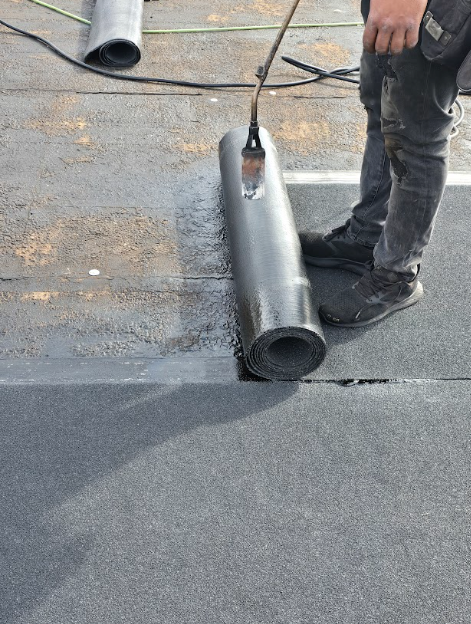
Installation method determines long-term performance for modified bitumen systems. Torch application uses controlled flame to heat the membrane underside, activating the asphalt adhesive layer for immediate bonding to the substrate. Cold-applied systems use adhesive compounds that cure chemically, eliminating open flame risks in occupied buildings or near combustible materials. Both methods require clean, dry substrate conditions and specific temperature windows during installation to achieve proper adhesion.
After installation completes, seams appear flat and uniform without bubbling or raised edges that indicate trapped air or moisture. Flashings at roof penetrations, parapet walls, and drainage points show tight integration with the membrane surface, eliminating the pathways where leaks typically begin. The finished roof sheds water effectively toward drains and scuppers rather than allowing ponding in low areas, and the surface texture provides slip resistance for maintenance access.
Modified bitumen systems typically include mineral granule surfacing on the top ply, which reflects UV radiation and reduces surface temperatures compared to smooth-surfaced membranes. Preventative maintenance involves biannual inspections to check seam integrity, clear debris from drains, and identify any mechanical damage before water penetrates the membrane layers. Properly maintained modified bitumen roofs regularly perform for twenty years or longer in North Texas climate conditions.
What Commercial Property Managers Usually Ask
Questions about modified bitumen roofing typically focus on performance expectations, installation requirements, and maintenance needs specific to commercial applications.
What makes modified bitumen different from standard built-up roofing?
Modified bitumen incorporates polymer additives into the asphalt compound, which gives the material rubber-like flexibility that built-up roofing lacks, allowing it to handle thermal movement without cracking across seams or at penetrations.
How does this roofing system perform during Wichita Falls hailstorms?
The reinforced membrane construction and multiple plies create impact resistance that absorbs hail energy better than single-ply systems, though severe hail can still puncture the surface and require targeted repairs to maintain waterproofing integrity.
When should modified bitumen installation happen during the year?
Installation requires dry conditions and temperatures above 40 degrees for proper adhesive curing, making spring and fall optimal in North Texas when humidity levels stay moderate and weather patterns remain stable for multi-day installation schedules.
What type of substrate preparation does installation require?
The existing roof deck must be structurally sound, completely dry, and free of debris or loose material, with any deteriorated sections replaced before membrane installation begins to prevent future failures.
How often does this roofing system need professional maintenance?
Biannual inspections allow contractors to identify small issues before they expand, with additional inspections recommended after severe weather events that may cause damage not immediately visible from ground level.
EZ Roofing & Construction LLC provides detailed evaluations of existing commercial roof conditions and substrate compatibility before modified bitumen installation. Request a building-specific assessment that considers your roof's slope, drainage configuration, and exposure factors.