


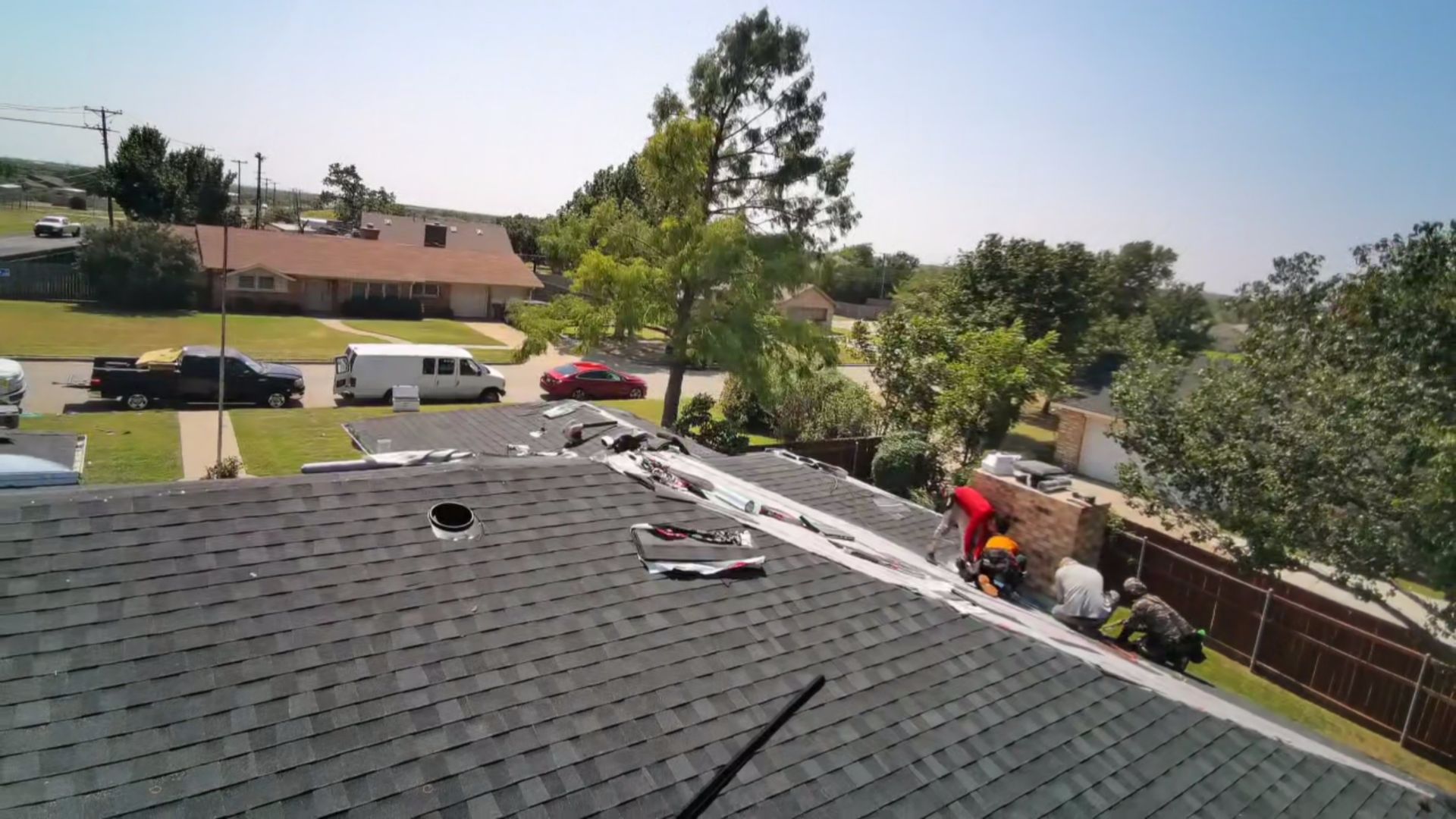
Finding Damage That High Winds Leave Behind
Storm & Wind Damage Restoration in Wichita Falls for properties affected by severe weather and high-wind events
Severe storms damage roofing systems in ways that often remain hidden from ground-level observation, with wind uplift breaking shingle seal strips, loosening flashing, and creating entry points for water infiltration that may not produce visible interior damage until weeks after the weather event. Storm and wind damage restoration services address both obvious destruction and subtle failures throughout Wichita Falls, where thunderstorm systems regularly produce winds exceeding sixty miles per hour and create ongoing stress on roofing components. EZ Roofing & Construction LLC responds quickly following major weather events to conduct thorough evaluations that document damage severity and identify all affected areas before water penetration causes additional structural problems.
Inspections following high winds examine shingle adhesion, flashing attachment, ridge cap condition, and signs of debris impact that compromise weather protection. Wind creates uplift pressure that works against fastener holding power, gradually loosening nails and breaking factory-applied sealant even when shingles remain in place. Common storm-related issues throughout North Texas and Southern Oklahoma include lifted shingles at roof edges where wind forces concentrate, damaged valley flashing from tree branch impacts, and torn underlayment where wind-driven rain penetrates around loosened materials.
Schedule a post-storm inspection within days of severe weather to document damage while conditions remain fresh and before additional rain causes secondary problems from initial storm damage.
What You Notice Once Restoration Work Is Finished
Restoration work replaces damaged materials and reinforces vulnerable areas that showed weakness during the storm event. Contractors remove and replace wind-lifted shingles rather than simply renailing them, since lifted shingles have broken seal strips that no longer provide proper weather protection. Flashing receives new fasteners and sealant at points where wind force created gaps or separation from roof surfaces.
After restoration completes, roof surfaces show uniform appearance without raised edges or missing sections, and flashings sit flush against surfaces they protect. Attic spaces remain dry during subsequent rain events, and interior ceilings show no new staining or moisture evidence. The restored roof withstands normal weather without the ongoing deterioration that occurs when minor storm damage goes unaddressed and allows water infiltration to begin degrading decking and structural members.
Documentation assistance supports the restoration process by providing detailed damage reports and photographic evidence that insurance adjusters need for claims evaluation. Fast response times matter because delays allow initial damage to expand, and thorough evaluation identifies all affected areas in a single assessment rather than requiring multiple repair visits as additional problems surface. Steps taken during restoration focus on returning roofing systems to pre-storm condition while addressing any vulnerabilities that the weather event exposed.
Common Questions About This Service
Property owners dealing with storm aftermath want to understand how damage assessment works and what restoration involves, particularly regarding documentation needs and timing considerations.
Why should inspection happen even when no obvious damage appears?
Wind can break shingle seals and loosen fasteners without causing visible displacement, creating hidden vulnerabilities where future storms cause immediate failure or where water gradually infiltrates until interior damage becomes apparent weeks later.
What does storm damage documentation include?
Detailed inspection reports describe specific damage locations, include photographs showing affected areas from multiple angles, note measurements and quantities of damaged materials, and provide analysis of whether damage resulted from the documented weather event or from pre-existing conditions.
How quickly does restoration need to happen after storm damage occurs?
Immediate temporary weatherproofing prevents additional damage while permanent repairs are scheduled, though complete restoration should happen within weeks to prevent water infiltration from causing rot, mold growth, or structural deterioration beyond the initial storm damage scope.
What makes certain roofing components more vulnerable to wind damage?
Roof edges, ridge lines, and areas around penetrations experience higher wind pressures than field areas, making these locations more likely to show damage after severe weather and requiring special attention during post-storm inspections.
When does storm damage require full replacement rather than targeted repairs?
Widespread damage affecting more than thirty percent of roof area, or severe impacts that compromise decking integrity, typically justify replacement rather than extensive repair work that approaches replacement cost without providing the warranty coverage and uniform condition that new installation offers.
EZ Roofing & Construction LLC provides comprehensive storm damage evaluation and works directly with property owners throughout the restoration process. Contact us at (940) 447-6233 to arrange a thorough assessment that documents all damage and establishes clear restoration requirements.